
Peptide Research Database
Peptide FAQ
94 evidence-based answers on reconstitution, technique, stability, dosing math, and research protocols. All compounds for Laboratory Research Use Only.
Reconstitute now
Verify a batch
Showing 94 answers
ASCEND Calculator
How precise is the ASCEND peptide calculator?
ASCEND rounds all output volumes to 0.01mL the smallest graduation on a standard 100-unit insulin syringe. This eliminates manual rounding errors at the point of draw. For doses below 10mcg, the calculator flags when concentration should be reduced to keep the draw volume above the 0.01mL minimum. See Methodology → Open Calculator →
What happens if I over-concentrate a peptide solution?
Over-concentration pushes draw volume below syringe resolution. A 10mg/mL stock dosed at 100mcg requires only 0.01mL one graduation leaving zero tolerance for error. Dropping to 2mg/mL gives a 0.05mL draw, a 5× larger target. ASCEND's Vial Guard warning fires when calculated volume falls below 0.02mL. Open Calculator →
Does Bacteriostatic Water preserve all peptides the same way?
No. BAC water (0.9% benzyl alcohol) is unsuitable for several peptides. Synapsin requires sterile saline benzyl alcohol degrades its GHK-Cu and Dihexa components. Intranasal peptides like Semax Amidate and N-Acetyl Selank Amidate tolerate preservative-free saline better. Always verify peptide-specific diluent compatibility before reconstituting. Diluent Guide → Open Calculator →
Can the ASCEND calculator be used with both U-100 and U-40 syringes?
Yes. ASCEND outputs volume in mL hardware-agnostic and valid for any syringe. For a U-40 syringe (40 units = 1mL), each unit mark equals 0.025mL. For a U-100 syringe (100 units = 1mL), each unit equals 0.01mL. Enter your vial strength and dose; the mL result applies to either barrel. Open Calculator →
How do I convert a microgram dose to insulin syringe units?
Formula: Volume (mL) = Dose (mg) ÷ Concentration (mg/mL). Multiply by 100 to get U-100 syringe units. Example: 250mcg (0.25mg) from a 2.5mg/mL solution = 0.25 ÷ 2.5 = 0.1mL = 10 units. The ASCEND calculator performs this automatically enter your actual vial mg and water mL to get the exact draw. Open Calculator →
Which syringe barrel size gives the most precision for small doses?
For doses under 30 units, use a 0.3mL (30-unit) syringe graduation marks are spaced farther apart, making single-unit reads accurate. On a 1mL syringe, each mark is compressed; at small volumes, one mark error represents a larger percentage dose deviation. Match barrel size to your dose range, not vial size. Open Calculator →
What are the most common peptide dosing errors?
1) Confusing mg and mcg (1mg = 1,000mcg). 2) Not recalculating draw volume when using a different concentration than the protocol specifies. 3) Reading syringe markings on the wrong scale (units vs mL). 4) Not accounting for needle dead space on smaller syringes. ASCEND eliminates errors 1-3 automatically enter your actual vial values. Open Calculator →
Technique & Administration
Why should I swirl, not shake, a peptide vial after adding water?
Shaking creates mechanical shear force that physically unfolds and denatures peptide chains. Swirl gently until the lyophilized cake dissolves typically 30-60 seconds. If the solution remains cloudy after 5 minutes of gentle swirling, the peptide may be compromised. Never use a vortex mixer on any research peptide preparation. Methodology → Open Calculator →
Should I inject bacteriostatic water directly onto the peptide powder?
No. Aim the needle at the inner glass wall and let water trickle down slowly. A direct stream fractures the lyophilized cake under hydraulic pressure, physically shearing peptide bonds before dissolution occurs. Let water flow down the glass and pool beneath the powder cake. This applies to every peptide regardless of molecular weight. Methodology → Open Calculator →
What needle gauge is recommended for subcutaneous peptide injections?
Use 29-31 gauge for subcutaneous (SC) injections fine enough to minimize tissue trauma and discomfort. 27-28 gauge is acceptable. Never use needles thicker than 25g for SC peptide administration. For intramuscular (IM) injections requiring deeper delivery, 23-25g is appropriate given greater tissue penetration depth. Methodology → Open Calculator →
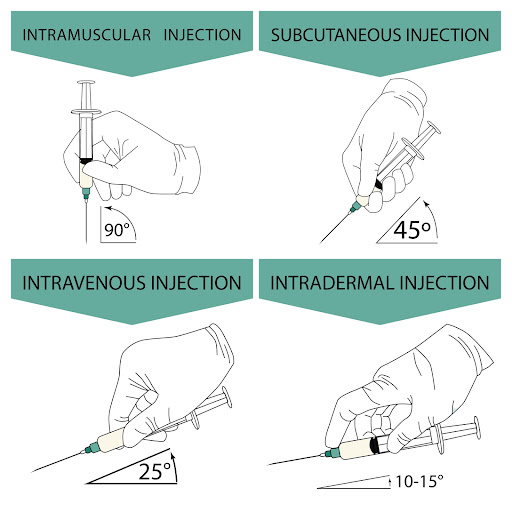
What angle should I inject at for subcutaneous vs intramuscular?
Injection angle determines tissue depth. Subcutaneous (SC): 45° - needle enters the fat layer just below skin. Intramuscular (IM): 90° - perpendicular insertion reaches muscle belly. Intravenous (IV): 20-25° - low angle for vein access. Intradermal: 10-15° - nearly parallel to skin surface for dermal layer only. Most peptide research protocols use SC at 45° into abdominal or thigh fat. Pinch the skin for SC; do not pinch for IM.
Methodology → Open Calculator →
What are the best injection sites for subcutaneous peptide administration?
The abdomen is preferred inject at least 2 inches from the navel where fat layer is consistent. Outer thigh and lateral flank are secondary sites. Avoid the inner arm (thin, variable fat layer) and areas with scar tissue, bruising, or visible vasculature. Consistent site selection improves absorption reproducibility across research sessions. Methodology → Open Calculator →
Why must injection sites be rotated, and how often?
Repeated injections cause lipodystrophy localized fat breakdown or buildup that alters absorption rates unpredictably. Rotate at least 1-2 cm from the previous site within a region, cycling through a minimum of 4 distinct anatomical zones. With daily injections, 7+ mapped sites prevent any single zone from overloading. Methodology → Open Calculator →
Storage Essentials
Can I freeze reconstituted peptide solution to extend shelf life?
No. Freeze-thaw cycles form ice crystals that physically rupture peptide tertiary structure. Once reconstituted in BAC water, store at 2-8°C only never freeze. Lyophilized powder can be stored at -20°C for 12-24 months, but once water is added, refrigeration is the only appropriate storage method. Methodology → Open Calculator →
How do I know if my reconstituted peptide has degraded?
Visual signs: cloudiness, visible particulates, yellow or brown discoloration, and crystalline deposits all indicate degradation. A clear, colorless solution stored properly within its use-by window is generally viable. Discard any vial showing color change or suspended particles never attempt to filter and inject a visibly compromised preparation. Methodology → Open Calculator →
What is the difference between bacteriostatic water and sterile water for injection?
Bacteriostatic Water (BAC) contains 0.9% benzyl alcohol, which inhibits bacterial growth and enables multi-dose use over 28 days. Sterile Water for Injection (SWFI) contains no preservative it is single-use only and must be discarded within hours of opening. Always use BAC water unless the peptide's profile specifically contraindicates benzyl alcohol. Methodology → Open Calculator →
Protocols & Cycling
How does a peptide's half-life determine dosing frequency?
Half-life is the time for plasma concentration to drop 50%. Peptides must be redosed before falling below minimum effective concentration. CJC-1295 (No DAC) at 30 minutes requires 2-3× daily dosing. Semaglutide at 7 days requires once-weekly injection. Half-life is the single biggest determinant of protocol design match dose frequency to half-life, not convenience. Methodology → Open Calculator →
What is steady-state dosing and when does it matter?
Steady state is reached after 4-5 consecutive half-lives of consistent dosing when amount dosed equals amount cleared per interval. For Ipamorelin (2h half-life), steady state occurs in ~10 hours. For Semaglutide (7 days), it takes 5 weeks. Research effects often intensify as steady state is approached; baseline measurements should account for this window. Methodology → Open Calculator →
What are the most studied peptide research stacks?
The most-studied pairings: BPC-157 + TB-500 (complementary mechanisms local healing + systemic repair); CJC-1295 No DAC + Ipamorelin (synergistic GH pulse GHRH + GHRP on separate receptor classes). Key principle: avoid combining two GHRPs redundant receptor saturation reduces efficiency. Maximum 2-3 simultaneous peptides for controlled research. All for Laboratory Research Use Only. All Calculators →
What cycling protocol prevents receptor desensitization?
Most protocols follow 8-12 weeks on, 4 weeks off to prevent receptor downregulation. GHRP/GHRH stacks respond to "5 days on, 2 days off" weekly cycling to preserve pulsatile GH response. BPC-157 is typically run 4-6 weeks continuously. Longer cycles do not produce proportionally greater results receptor sensitivity recovery is part of the protocol design. All for Laboratory Research Use Only. All Calculators →
Weight Loss & Metabolic
What is the recommended reconstitution volume for a 10mg Retatrutide vial?
For 10mg Retatrutide, add 2mL of Bacteriostatic Water to achieve a 5mg/mL concentration. A 0.1mL draw on a 100-unit insulin syringe delivers 0.5mg. Allow the vial to reach room temperature before introducing diluent to minimize vacuum-induced peptide shearing at the lyophilized cake interface. Open Calculator →
How should reconstituted Tirzepatide be stored and what is its working shelf life?
Reconstituted Tirzepatide remains stable for up to 28 days at 2-8°C protected from light. Lyophilized powder is stable at room temperature for 12 months in desiccated conditions. Freeze-thaw cycling degrades the dual GIP/GLP-1 receptor agonist backbone; avoid any temperature excursions above 25°C after reconstitution. Open Calculator →
What is the molecular weight of Semaglutide and why does it matter for dosing?
Semaglutide has a molecular weight of approximately 4,113.58 Da. Its C18 fatty diacid chain drives albumin binding that extends half-life to ~7 days. Accurate mass-based dosing calculations must reference the full molecular weight including the lipid modification, not the peptide backbone alone. Open Calculator →
Why is precise dilution volume critical when reconstituting Cagrilintide?
Cagrilintide's amylin receptor agonism operates within a narrow therapeutic concentration window. A 10% volume error on a 5mg vial shifts concentration from 2.5mg/mL to 2.27mg/mL a 9.1% underdose. At microgram-range working doses, this variance is sufficient to invalidate protocol reproducibility across research cohorts. Open Calculator →
What bacteriostatic water ratio is recommended for Survodutide reconstitution?
For 5mg Survodutide, 1mL of Bacteriostatic Water yields a 5mg/mL stock; most protocols dilute to 1-2mg/mL for precise delivery. Survodutide is a dual GLP-1/glucagon receptor agonist (MW ~3,700 Da). It is supplied for Laboratory Research Use Only. Open Calculator →
How do you reconstitute a 10mg vial of Mazdutide?
Add 2mL of Bacteriostatic Water slowly along the vial wall never inject directly onto the lyophilized cake. This yields 5mg/mL. Gently swirl; do not vortex. A 0.1mL draw on a 100-unit insulin syringe delivers exactly 0.5mg. Mazdutide's GLP-1/GCGR dual agonist structure is sensitive to mechanical shear. Open Calculator →
What is the shelf life of reconstituted Liraglutide?
Reconstituted Liraglutide is stable for 30 days at 2-8°C away from direct light. Exposure to UV accelerates asparagine deamidation at residue 34, reducing biological activity within 48 hours at temperatures above 25°C. The GLP-1 analog backbone is also susceptible to hydrolysis under alkaline conditions above pH 8.5. Open Calculator →
What is the molecular weight of Dulaglutide?
Dulaglutide has a molecular weight of approximately 59,669 Da the largest GLP-1 receptor agonist in common research use. Its IgG4-Fc fusion domain extends plasma half-life to approximately 5 days via FcRn-mediated recycling, distinguishing it from all native GLP-1 peptide analogs. Open Calculator →
Why is dilution accuracy especially important when working with AOD-9604?
AOD-9604 is typically dosed at 250-500mcg. At these microgram-level doses, a 0.1mL syringe error on a 2mg/2mL solution shifts delivered dose by ±100mcg a 20-40% variance. Precision in both reconstitution volume and syringe draw is essential for reproducible β3-adrenergic receptor activation thresholds. Open Calculator →
What is the standard reconstitution protocol for Adipotide?
Adipotide is reconstituted at 1mg/mL by adding 5mL Bacteriostatic Water to a 5mg vial. Research protocols use 0.5mg/kg body weight increments. Adipotide targets PROHIBITIN receptors on adipose vasculature, triggering apoptotic remodeling of white adipose tissue. It is classified for Laboratory Research Use Only. Open Calculator →
Healing & Regeneration
What is the optimal reconstitution protocol for a 5mg BPC-157 vial?
Add 2mL of Bacteriostatic Water to 5mg BPC-157 to achieve a 2.5mg/mL (2,500mcg/mL) concentration. A 0.04mL draw on a 100-unit insulin syringe delivers 100mcg. This ratio provides sufficient volume for sub-100mcg precision dosing without excessive dilution that would introduce measurement error. Open Calculator →
How long does TB-500 remain stable after reconstitution?
Reconstituted TB-500 (Thymosin Beta-4 fragment) is stable for 14-28 days at 2-8°C. The peptide's actin-binding domain is sensitive to oxidation; store with minimal headspace and avoid repeated freeze-thaw cycles. Lyophilized powder stored below -20°C maintains potency for 24 months or longer. Open Calculator →
What is the molecular weight of GHK-Cu?
GHK-Cu (Copper Tripeptide-1) has a molecular weight of 340.38 Da for the peptide backbone; the copper ion adds 63.5 Da (total ~404 Da). This exceptionally low molecular weight enables efficient dermal penetration and broad tissue distribution from both topical and injectable research applications. Open Calculator →
Why does AHK-Cu require precise volumetric measurement?
AHK-Cu is typically researched at 1-2mg doses. At 1mg/mL, a ±0.05mL syringe error represents ±5% dose variance. For copper-chelating peptides, concentration errors alter the Cu²⁺ to peptide stoichiometric ratio, which directly affects the active copper complex yield and downstream collagen-stimulating activity. Open Calculator →
What concentration and route are used for LL-37 in antimicrobial research?
LL-37 is reconstituted at 1mg/mL (5mg vial + 5mL BAC water). MIC assays typically require 0.5-4mcg/mL working dilutions. LL-37 is the only known human cathelicidin, active against gram-positive and gram-negative bacteria. All LL-37 preparations are for Laboratory Research Use Only. Open Calculator →
How is a 5mg KPV vial reconstituted for research?
Add 2.5mL of Bacteriostatic Water to a 5mg KPV vial to create a 2mg/mL solution. KPV (Lys-Pro-Val) is an alpha-MSH C-terminal tripeptide typically researched at 200-400mcg doses. A 0.1-0.2mL draw on a 100-unit syringe delivers this range with adequate precision. Open Calculator →
What are the storage and pH stability requirements for ARA-290?
ARA-290 should be stored lyophilized at -20°C for long-term stability exceeding 24 months. Once reconstituted, use within 7-14 days at 4°C. The cyclic helix-B surface peptide structure is sensitive to alkaline pH degradation; maintain reconstituted solutions below pH 8.0 to preserve EPOR/βcR agonist activity. Open Calculator →
What is the molecular weight of GHK (copper-free)?
GHK (Gly-His-Lys, copper-free) has a molecular weight of 340.38 Da. Research indicates GHK retains meaningful collagen I and III stimulatory activity via TGF-β signaling without copper, though generally at lower magnitude than GHK-Cu. The copper ion amplifies bioactivity through additional redox and enzymatic mechanisms. Open Calculator →
What is the difference between Thymosin Beta-4 (TB-4) and TB-500?
Thymosin Beta-4 is the complete 44-amino-acid peptide (MW 4,964 Da). TB-500 is the synthetic fragment (residues 17-23) containing the actin-binding domain. TB-4 additionally includes sequences for cardiac progenitor cell activation not present in TB-500. Dosing parameters differ significantly verify your vial label before calculating draw volume. Open Calculator →
Growth Hormone & IGF
What is the standard reconstitution and dose reference for Ipamorelin?
Ipamorelin is typically reconstituted at 2mg/mL by adding 2.5mL BAC water to a 5mg vial. Research doses range from 200-300mcg per administration. Ipamorelin is among the most ghrelin receptor-selective GHRPs with minimal cortisol and prolactin co-stimulation. All Ipamorelin preparations are for Laboratory Research Use Only. Open Calculator →
How stable is CJC-1295 without DAC after reconstitution?
CJC-1295 without DAC (mod GRF 1-29) has an in vivo half-life of approximately 30 minutes due to minimal albumin binding. Reconstituted solutions remain chemically stable at 4°C for 7-14 days. The absence of the Drug Affinity Complex requires more frequent dosing intervals than the DAC variant. Open Calculator →
What is the molecular weight of CJC-1295 with DAC?
CJC-1295 with DAC has a molecular weight of approximately 3,647.28 Da. The maleimidopropionic acid Drug Affinity Complex extends biological half-life to 8-10 days via non-covalent serum albumin interaction, enabling weekly research dosing intervals with sustained GH pulse elevation. Open Calculator →
Why is syringe accuracy especially important for Sermorelin research protocols?
Sermorelin is typically dosed at 200-500mcg. At 1mg/mL concentration, each 0.01mL graduation equals 10mcg. A half-graduation error (0.005mL) introduces a 5mcg deviation critical for GH pulse amplitude reproducibility in longitudinal research models requiring consistent GHRH receptor stimulation. Open Calculator →
What concentration should Hexarelin be prepared at?
Hexarelin is reconstituted at 2mg/mL (10mg vial + 5mL BAC water). Research doses range from 100-200mcg. Hexarelin produces the highest GH secretion amplitude among GHRPs due to its additional aromatic residue at position 2. All Hexarelin preparations are for Laboratory Research Use Only. Open Calculator →
How should a 5mg GHRP-2 vial be reconstituted?
Add 2.5mL of Bacteriostatic Water to 5mg GHRP-2 for a 2mg/mL solution. A 0.05mL draw on a 100-unit syringe delivers 100mcg. GHRP-2 is less lipophilic than GHRP-6 and requires no special solubilization. Allow 60 seconds after adding diluent before gently swirling to ensure complete dissolution. Open Calculator →
What are the primary degradation pathways for GHRP-6?
GHRP-6's primary degradation pathways are oxidation of its histidine residue and temperature-dependent peptide bond hydrolysis. Lyophilized GHRP-6 stored at -20°C is stable for 24 months. Reconstituted solutions degrade within 3 days at room temperature; refrigeration at 4°C extends working stability to 21 days. Open Calculator →
What is the molecular weight of MK-677 and how does its small-molecule status affect handling?
MK-677 (Ibutamoren Mesylate) has a molecular weight of 624.77 Da as the mesylate salt. Unlike peptide GHSPs, MK-677 is a non-peptide small molecule: it dissolves in DMSO at 50mg/mL and in water at approximately 5mg/mL no bacteriostatic water reconstitution required. Open Calculator →
Why is precise reconstitution especially critical for IGF-1 LR3?
IGF-1 LR3 binds IGF-1 receptors at nanomolar concentrations. Research doses as low as 20-50mcg mean each 0.01mL syringe graduation equals 10mcg. A single graduation error determines whether receptor saturation or sub-threshold exposure occurs, directly invalidating dose-response data. Open Calculator →
What is the standard working concentration for PEG-MGF?
PEG-MGF is reconstituted at 1mg/mL using sterile BAC water. PEGylation extends half-life from minutes (native MGF) to approximately 48-72 hours, enabling once or twice weekly administration. PEG-MGF activates satellite cell proliferation pathways and is supplied for Laboratory Research Use Only. Open Calculator →
How do I reconstitute Follistatin 344?
Add 1mL of sterile Bacteriostatic Water to a 1mg Follistatin 344 vial to yield 1,000mcg/mL. For a 100mcg dose, draw to the 10 line on a 100-unit syringe. Do not vortex the large protein structure (MW ~35-45 kDa with glycosylation) is shear-sensitive. Add 0.1% BSA for working solutions below 10mcg/mL. Open Calculator →
Cognitive & Nootropic
What are the stability parameters for P21 peptide?
P21, a BDNF-mimetic nootropic, should be stored lyophilized at -20°C for 18-24 months. Post-reconstitution stability in BAC water at 4°C is approximately 14 days. P21 activates TrkB receptors; protein-folding integrity is essential for receptor binding, making thermal stability management a prerequisite for valid research outcomes. Open Calculator →
What is the molecular weight of Semax and how does it affect intranasal bioavailability?
Semax (Met-Glu-His-Phe-Pro-Gly-Pro) has a molecular weight of 813.94 Da. This low molecular weight facilitates intranasal bioavailability via olfactory transport, bypassing the blood-brain barrier with approximately 60-80% CNS delivery efficiency. Semax is formulated as 0.1% or 1% nasal spray solution. Open Calculator →
How does N-acetylation affect dosing calculations for N-Acetyl Semax?
N-acetylation adds 42.04 Da to Semax's backbone (813.94 Da), bringing molecular weight to approximately 856 Da a 5.2% mass increase. Mass-based protocols must account for this modification. Equivalent molar dosing requires a proportional mass increase relative to standard Semax to achieve identical receptor occupancy. Open Calculator →
What concentration and route are used for Selank in anxiolytic research?
Selank is most commonly prepared as 0.15% (1.5mg/mL) for intranasal delivery. Subcutaneous protocols use 250-500mcg from a 2mg/mL reconstitution. Selank is a GABAergic/BDNF-modulating heptapeptide developed in Russia as a tuftsin analog. It is for Laboratory Research Use Only. Open Calculator →
How stable is Dihexa in solution and what container type is required?
Dihexa is stable in DMSO for 12+ months at -20°C and in aqueous solution for 7-10 days at 4°C. Its lipophilicity (log P ≈ 2.8) causes significant adsorption to plastic surfaces; use glass syringes and glass storage vials to prevent dose loss through container wall binding. Open Calculator →
What is the molecular weight of DSIP?
DSIP (Delta Sleep-Inducing Peptide) has a molecular weight of 848.86 Da. This nonapeptide was first isolated from rabbit cerebral venous blood in 1974. Despite rapid plasma clearance (half-life ~3.5-4.5 minutes unmodified), its small size enables rapid CNS distribution through passive diffusion. Open Calculator →
Why is concentration precision important for PE-22-28?
PE-22-28, a spadin analog targeting TREK-1 potassium channels, exhibits steep concentration-dependent receptor blockade. A 2× concentration shift can move from sub-threshold to saturation occupancy. Consistent 1mg/mL reconstitution is the foundational control for reproducible antidepressant-pathway research outcomes. Open Calculator →
What is the typical research protocol for Pinealon?
Pinealon (Glu-Asp-Arg) is used at 2-10mg/day in research models. Reconstitute at 2mg/mL (5mg + 2.5mL BAC water). Oral and intranasal routes are also investigated for CNS delivery. Pinealon is a geroprotective peptide targeting retinal and CNS tissues; all preparations are for Laboratory Research Use Only. Open Calculator →
How is Synapsin reconstituted for intranasal research?
Synapsin is reconstituted in sterile preservative-free saline (not BAC water) for intranasal delivery. Add 5mL saline to a 5mg vial for 1,000mcg/mL. Transfer to a nasal atomizer; each 0.1mL pump delivers 100mcg. Store at 4°C and use within 14 days. Synapsin combines GHK-Cu and Dihexa for synaptic plasticity research. Open Calculator →
How does Semax Amidate's stability compare to standard Semax?
Semax Amidate combines N-terminal acetylation and C-terminal amidation, blocking both aminopeptidase and carboxypeptidase degradation pathways. Reconstituted in BAC water at 4°C, it is stable for 30 days longer than standard Semax. This dual protection makes it the most stable of the three Semax variants and effective at lower concentrations. Open Calculator →
What is the molecular weight of N-Acetyl Selank Amidate?
Selank (Thr-Lys-Pro-Arg-Pro-Gly-Pro) has a molecular weight of 751.86 Da. N-Acetylation adds 42.04 Da; C-terminal amidation negligibly reduces mass. N-Acetyl Selank Amidate has an approximate molecular weight of 892.94 Da. Both modifications shield the peptide termini from enzymatic degradation, extending active half-life and CNS bioavailability. Open Calculator →
Longevity & Mitochondrial
How should MOTS-c be stored and what is its post-reconstitution window?
MOTS-c, a 16-amino-acid mitochondria-derived peptide, is stable lyophilized at -20°C for 24 months. Post-reconstitution stability in BAC water is 14 days at 4°C. Aliquot immediately upon reconstitution; each freeze-thaw cycle reduces AMPK-activating activity by approximately 10-15% due to peptide backbone oxidation. Open Calculator →
What is the molecular weight of SS-31 and how does its structure confer mitochondrial targeting?
SS-31 (D-Arg-Dmt-Lys-Phe-NH₂) has a molecular weight of 639.8 Da. Its alternating aromatic-cationic sequence and D-amino acid composition drive electrostatic mitochondrial inner membrane targeting. The amidated C-terminus prevents carboxypeptidase degradation, contributing to extended mitochondrial retention. Open Calculator →
Why does Epithalon require careful dilution management despite its small size?
Epithalon (Ala-Glu-Asp-Gly, MW 390.35 Da) is active via telomerase activation pathways at microgram concentrations. Over a 10-day research cycle, reconstitution to 5mg/mL requires ±0.01mL syringe accuracy. Volume errors that appear minor by percentage accumulate to meaningful cumulative dosing deviations across multi-injection protocols. Open Calculator →
What concentration should Thymosin Alpha-1 be prepared at?
Thymosin Alpha-1 (Tα1) is standardly reconstituted at 1mg/mL (5mg vial + 5mL BAC water). Research doses range from 0.8-1.6mg. Tα1 activates dendritic cell maturation and NK cell cytotoxicity via Toll-like receptor pathways. All Thymosin Alpha-1 preparations are for Laboratory Research Use Only. Open Calculator →
What are the pH and temperature stability parameters for AICAR?
AICAR (MW 338.23 Da) is stable in aqueous solution at pH 7.0 for 7 days at 4°C. Acidic conditions below pH 5.5 accelerate ribose ring opening and inactivation. Lyophilized AICAR is stable at room temperature for 6 months; desiccated storage is essential as hygroscopic uptake initiates hydrolytic degradation. Open Calculator →
What is the molecular weight of Vilon and what makes it unique?
Vilon (Lys-Glu) is a dipeptide bioregulator with a molecular weight of approximately 275.3 Da among the smallest bioactive research peptides. Developed at the Khavinson Institute as a thymus-derived geroprotective compound, its minimal structure enables direct cellular membrane penetration without requiring carrier mechanisms. Open Calculator →
Why is precise dosing especially critical for FOXO4-DRI?
FOXO4-DRI is a D-retro-inverso peptide with dose-dependent selectivity for senescent cells. Sub-therapeutic concentrations fail to disrupt the p21-FOXO4 survival pathway; excessive concentrations may extend cytotoxicity to non-senescent cells. Precise reconstitution to 1mg/mL is required to maintain the therapeutic selectivity window in senolytic research. Open Calculator →
How is recombinant Klotho prepared and what adsorption precautions are needed?
Recombinant α-Klotho fragment (~65 kDa) is reconstituted in sterile PBS at 0.1-1mg/mL. Carrier protein (0.1% BSA) is typically added to prevent adsorption to plastic container walls due to its large molecular weight. Klotho is an aging-suppressor protein; all preparations are for Laboratory Research Use Only. Open Calculator →
How do I reconstitute NAD+ and why must it be used within 24-48 hours?
Add 3mL of Bacteriostatic Water to a 500mg NAD+ vial to yield approximately 167mg/mL. Swirl gently never shake. NAD+ in aqueous solution is highly susceptible to hydrolysis and oxidation; it cannot be stored reconstituted for days or weeks. Prepare a fresh dose immediately before each administration session. Open Calculator →
Does 5-Amino-1MQ require reconstitution or a syringe?
No. 5-Amino-1MQ is an oral NNMT inhibitor taken as a capsule no reconstitution or injection required. Standard research dose is 50mg daily. Unlike most peptides on ASCEND, the calculator for 5-Amino-1MQ provides dose guidance only; there is no syringe draw calculation. Open Calculator →
Hormonal, Fertility & Sexual Health
What is the proper reconstitution procedure for VIP?
VIP (28 amino acids, MW 3,326.8 Da) is reconstituted at 0.1-1mg/mL in sterile saline or BAC water. For a 1mg vial, add 1mL Bacteriostatic Water. VIP is sensitive to freeze-thaw cycling; prepare small aliquots of 100-200mcg before freezing at -80°C to preserve receptor binding activity. Open Calculator →
What are the storage requirements for research-grade Oxytocin?
Synthetic Oxytocin (MW 1,007.19 Da) is stable in BAC water for 30 days at 2-8°C. The cyclic disulfide bond between Cys¹ and Cys⁶ is vulnerable to reducing agents (DTT, beta-mercaptoethanol) avoid co-storage with these reagents. Lyophilized powder stored at -20°C in desiccated conditions retains ≥95% purity for 24 months. Open Calculator →
What is the molecular weight of Glutathione and how does oxidation affect concentration?
Reduced Glutathione (GSH) has a molecular weight of 307.32 Da. Exposure to atmospheric oxygen oxidizes the cysteine thiol group, dimerizing two GSH molecules into GSSG and halving the active molar concentration without any change in apparent solution mass. Always work under inert gas conditions when preparing GSH solutions. Open Calculator →
What is the molecular weight of PT-141 and how does it differ from MT-II?
PT-141 (Bremelanotide) has a molecular weight of 1,025.2 Da. It is a cyclic heptapeptide derived from Melanotan II via metabolic C-terminal amide cleavage. PT-141's lactam bridge confers greater metabolic stability and MC3R/MC4R receptor selectivity, distinguishing its sexual function research profile from MT-II's melanogenesis-dominant activity. Open Calculator →
What reconstitution volume is recommended for a 10mg Melanotan II vial?
For 10mg Melanotan II, add 2mL of Bacteriostatic Water to yield 5mg/mL. A 0.02mL draw on a 100-unit insulin syringe delivers 100mcg. MT-II's cyclic heptapeptide structure remains stable for 30 days at 4°C protected from light. Melanotan II is supplied for Laboratory Research Use Only. Open Calculator →
How should Kisspeptin-10 be reconstituted for neuroendocrine research?
Kisspeptin-10 (MW 1,302.5 Da) is reconstituted at 1mg/mL (5mg vial + 5mL BAC water). Use within 7 days at 4°C. Avoid vortexing; Kisspeptin-10's β-sheet propensity makes it susceptible to amyloid-like aggregation under mechanical stress. It is an LH/FSH secretagogue acting on KISS1R receptors on GnRH neurons. Open Calculator →
How does Kisspeptin-54's half-life compare to Kisspeptin-10?
Kisspeptin-54 has a plasma half-life of approximately 28 minutes versus ~4 minutes for Kisspeptin-10. The extended N-terminal domain of KP-54 reduces renal clearance and protease access, producing a more sustained GnRH pulse activation. Reconstituted KP-54 is stable for 7 days at 4°C; aliquot to avoid freeze-thaw degradation. Open Calculator →
How do I reconstitute Gonadorelin and how does it differ from HCG in TRT research?
Add 2mL of Bacteriostatic Water to a 2mg Gonadorelin vial for 1,000mcg/mL. A 0.1mL draw delivers 100mcg. Unlike HCG (which mimics LH directly at the Leydig cell), Gonadorelin acts at the pituitary to stimulate endogenous LH release, preserving the full HPG feedback loop during TRT research protocols. Open Calculator →
How do I reconstitute HMG and what is in it?
Add 1mL of Bacteriostatic Water to a 75 IU HMG vial, yielding 75 IU/mL. HMG contains both FSH and LH in a 1:1 ratio. Unlike HCG (LH only), HMG supports both spermatogenesis (FSH-mediated) and testosterone production (LH-mediated), making it useful in comprehensive fertility research protocols. Open Calculator →
How should a 5,000 IU HCG vial be reconstituted?
Add 5mL of Bacteriostatic Water to a 5,000 IU HCG vial to yield 1,000 IU/mL. A 0.1mL draw on a 100-unit insulin syringe delivers 100 IU. HCG (MW ~36,700 Da) should be stored at 4°C and used within 30 days. Do not freeze reconstituted HCG oligosaccharide chain integrity is lost on freeze-thaw. Open Calculator →
Cosmetic & Topical
What working concentration is used for SNAP-8 in SNARE complex research?
SNAP-8 (MW 1,075.2 Da) is used at 5-10% concentration in topical formulations and at 1-2mg/mL for injectable research. It modulates neuromuscular junction signaling by competing with SNAP-25 within the SNARE complex. All SNAP-8 preparations are for Laboratory Research Use Only. Open Calculator →
How is Leuphasyl reconstituted and what is it used for?
Add 2mL of Bacteriostatic Water to a 5mg Leuphasyl vial to yield 2,500mcg/mL. Leuphasyl is a synthetic enkephalin analog that inhibits acetylcholine release at neuromuscular junctions, reducing muscle contraction and expression wrinkles. It is often combined with Snap-8 (Argireline) for synergistic anti-wrinkle research protocols. Open Calculator →
What concentration is used for Matrixyl in cosmetic research?
Matrixyl (Palmitoyl Pentapeptide-4, Pal-KTTKS) is used at 3-5% w/v concentration in topical formulations. The KTTKS sequence mimics the CB3 fragment of procollagen type I, signaling fibroblasts to upregulate collagen I, III, IV, and fibronectin via TGF-β. Palmitoylation enables transdermal delivery by increasing lipophilicity. Open Calculator →
How is Palmitoyl Pentapeptide reconstituted for research?
Add 2mL of Bacteriostatic Water to a 5mg Palmitoyl Pentapeptide (Pal-KTTKS) vial to yield 2,500mcg/mL. Store at 4°C and use within 14 days. Pal-KTTKS acts as a matrikine a procollagen sequence fragment that signals fibroblasts for its own resynthesis. It is frequently combined with GHK-Cu or Leuphasyl in cosmetic peptide research. Open Calculator →
All compounds listed are for Laboratory Research Use Only. Not approved for human therapeutic use, not drugs, not dietary supplements. Nothing on this page constitutes medical advice. Consult a licensed healthcare provider before using any compound.
Save unlimited protocols with ASCEND Pro
Pro users also get PK plotter access, batch calculations, and priority support.
Upgrade to Pro